"We need a fundamental shift in the way we think and behave, a shift made
possible by a fundamentally different approach to teaching and
learning: Education that nurtures children's innate curiosity about the natural
world, that fosters their understanding of the interconnectedness of all
living and non-living things, and instils in them an abiding sense of
care and responsibility for the well-being of their communities and
planet Earth."
- David Orr (Ecologist & Scholar)
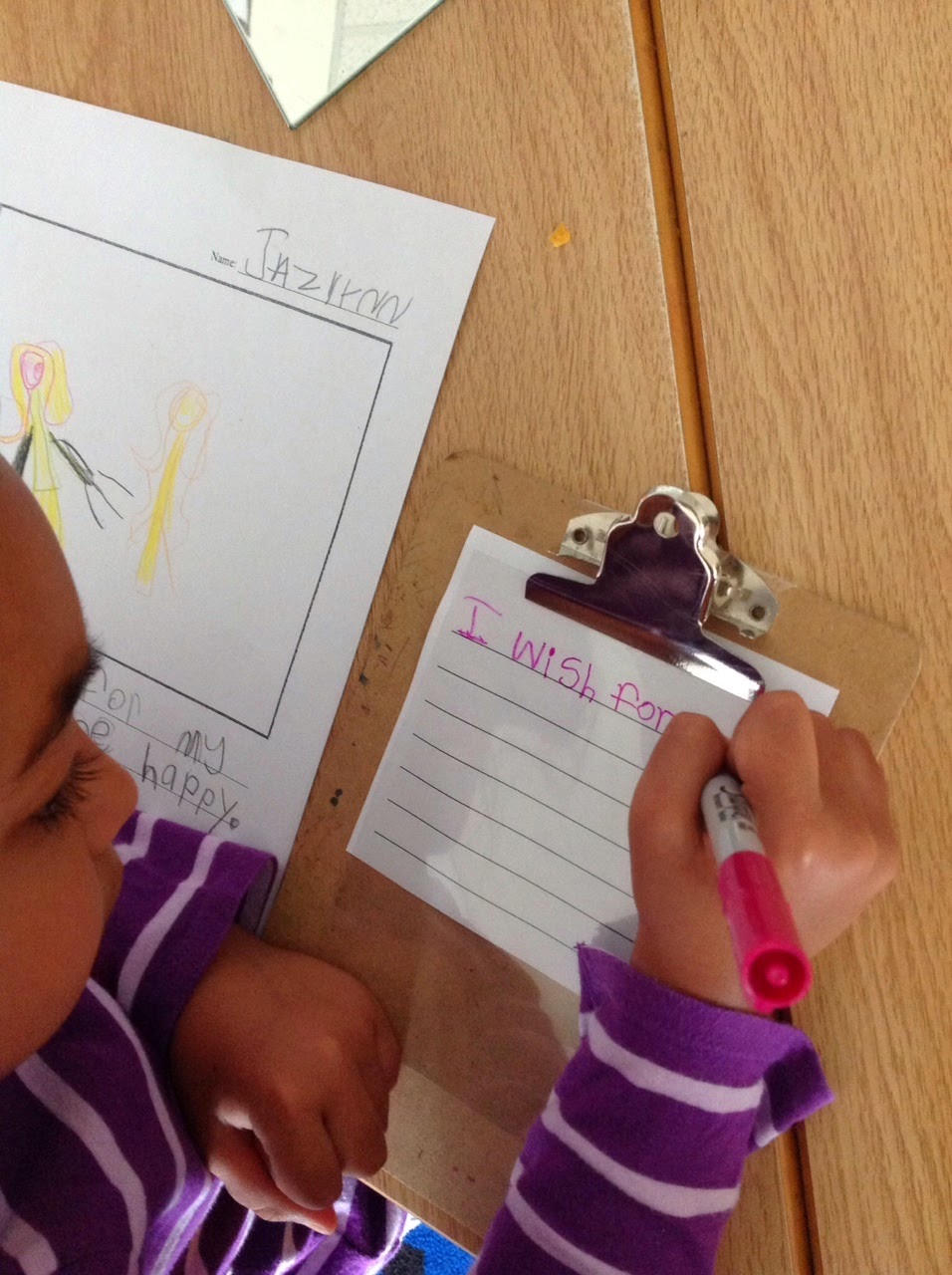
Over the course of the year, my DECE and I have been intrigued by the notion of making the classroom environment a third teacher and we thought there's no better way to do that then by bringing the outdoors inside. What started as a Nature Walk at the beginning of the school year has now lead to ongoing student wonderings, explorations, and most importantly a desire to care for and respect our environment. While our students chose to focus on one particular tree in our school yard (that they could see through one of our windows), they have come to a fundamental understanding and natural curiousity at this point in the year that they can make a difference.

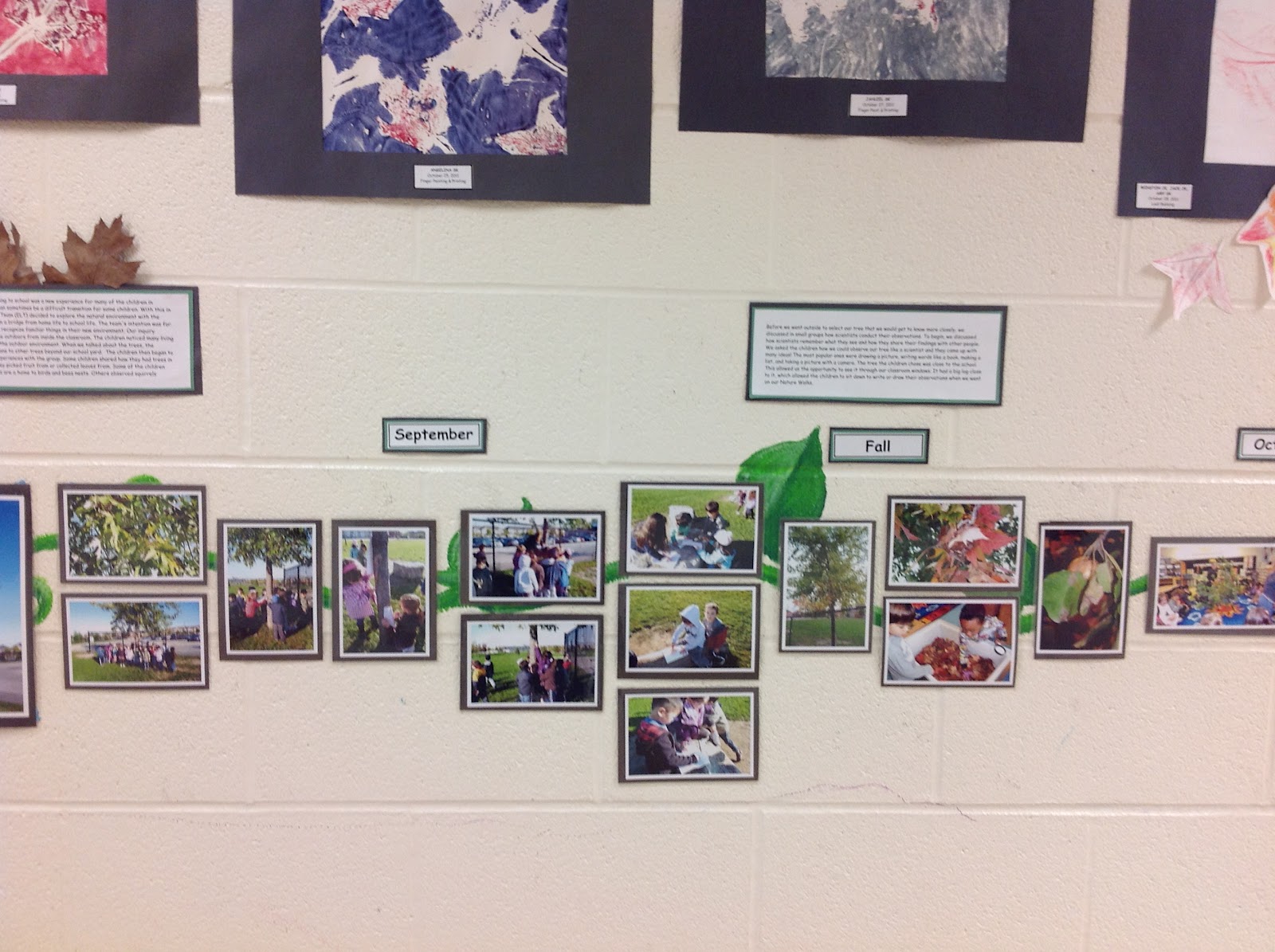
Our Tree Timeline documents our class' learning journey in the hallway outside of our classroom and truly tells a story from September until June. It highlights key findings, questions, observations, and student engagement in the inquiry process. To provide you with a few examples of this natural curiousity, below are some of our students' wonderings throughout the year:
"How does a tree grow?" - A.J.
"Does a tree die when it turns 100 like us?" - A.D.
"Why does a tree stand straight?" - L.D.
"Why and how do the leaves change colour?" - D.M.
"I wonder how the colour of the tree gets brown and then how the branches get brown too?" - L.D.
"How do the rings in the tree get bigger and bigger? Do the trees then have birthdays?" - I.D.
"Why do the needles fall off?" - A.L.
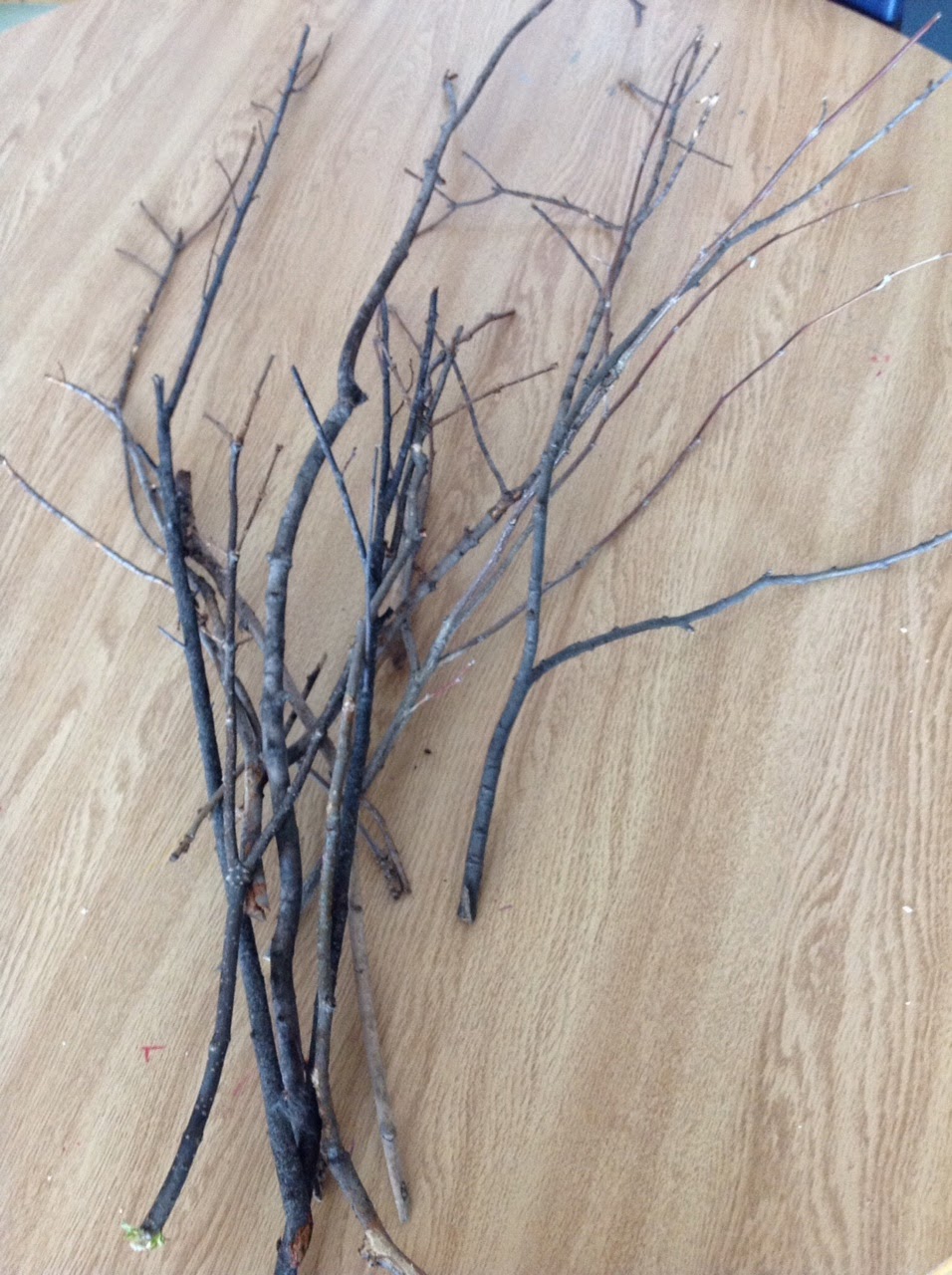
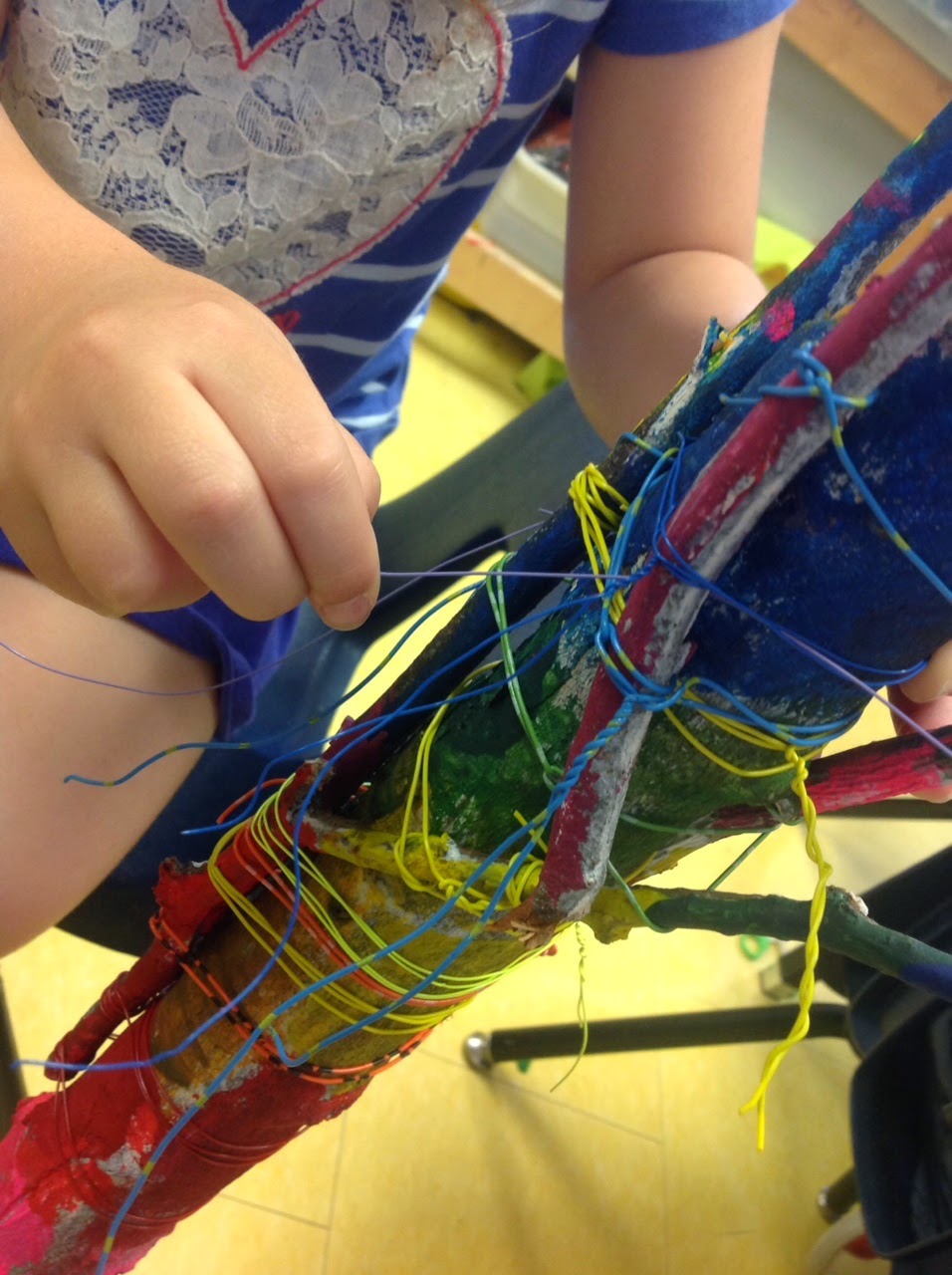
To incorporate art into our inquiry, our class completed bark and leaf rubbings, leaf printing, and stem printing. The learning experiences were completed by using natural materials that students collected from outside on our many Nature Walks. The belief of using natural materials in the classroom is from the Reggio-Emilia approach towards teaching and learning and we have found a profound shift in interest, engagement, and overall learning in our students with this approach.
Take a look at our environmental inquiry in action and we hope you feel inspired!